

Confirmed Tariffs Threaten South African Marine Exports—But Also Highlight Urgent Need for Global Partnerships
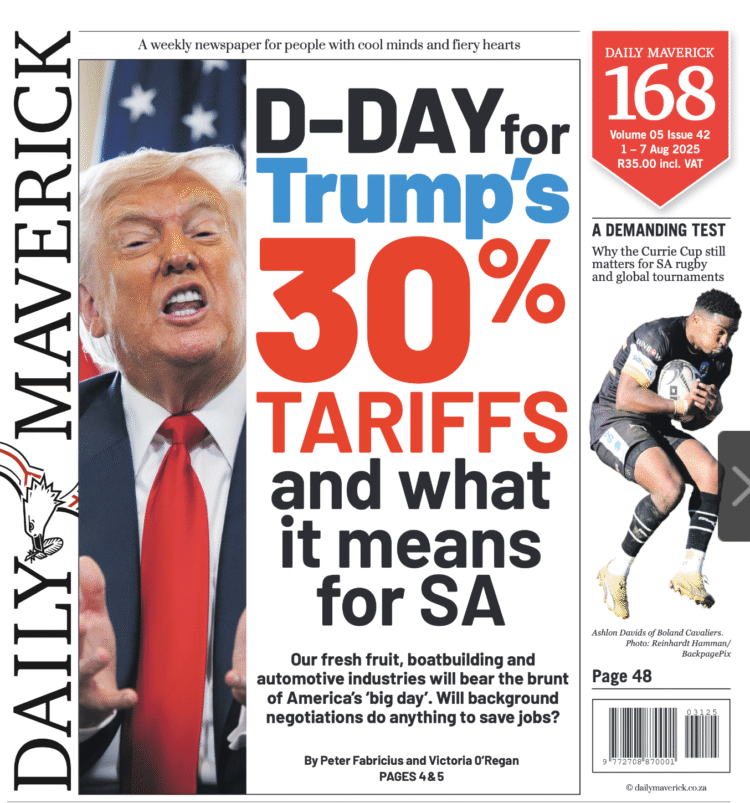
A provisional trade agreement between South Africa and the United States—announced by South African Trade Minister Parks Tau—had aimed to prevent the imposition of steep tariffs on South African exports. However, it has now been confirmed that from August 1, a 30% US tariff has been applied to key exports, including boats, vehicles, and aircraft, sectors that form the backbone of South Africa’s advanced manufacturing economy.
For the South African marine industry in particular, this development is a significant blow. The US has long been a key export market for locally built leisure vessels, including internationally respected brands that have helped position South Africa as a competitive player in global boatbuilding. The 30% tariff severely undermines price competitiveness, threatens order books, and introduces immediate uncertainty into an already pressured industry still recovering from pandemic-era disruptions and supply chain volatility.
“This isn’t just about cost—it’s about continuity and confidence,” said one industry stakeholder. “South African manufacturers have spent years building a reputation for quality and reliability. A sudden 30% price penalty puts us at an unfair disadvantage and risks damaging long-standing trade relationships.”
Nonetheless, the current challenge is also a strategic wake-up call. Marine manufacturing stakeholders are urging a re-examination of trade policies, while also using this moment to accelerate diversification of export markets, strengthen intra-African trade, and deepen value-added production. Recent negotiations with Japan, which reduced proposed marine tariffs from 25% to 15%, show that progress is possible through continued engagement and coalition building.
President Cyril Ramaphosa has reiterated the need for South Africa—and Africa as a whole—to reduce dependency on a narrow band of export destinations. “We must accelerate domestic value creation and expand our export base,” he said, underscoring the broader imperative to build resilience and adaptability into the continent’s economic future.
For international investors, OEMs, and innovators, this is an inflection point—not a stop sign. The fundamentals of South Africa’s marine sector remain strong: a skilled labour force, world-class engineering, and a growing market for sustainable innovation. What’s needed now is partnership: joint ventures, technology transfer, and shared infrastructure that can unlock scale and competitiveness.
The African Boating Conference, taking place on 21–22 October in Cape Town, provides a timely and vital forum to address these issues. It will bring together industry leaders, policymakers, financiers, and manufacturers to examine trade, investment, and innovation opportunities within Africa’s marine economy. At a time when old trade certainties are dissolving, the event offers a unique opportunity to help shape what comes next.
Copyright African Boating Conference 2025 | All rights reserved